
%20(1).png)





Understanding Piezo Injector Failure Modes
Learn how piezo injectors fail, the early warning signs, and why advanced testing is essential for accurate diagnosis and performance validation.
Piezo injectors are built for precision, but that same precision makes them highly sensitive to even the smallest internal changes. Unlike traditional injectors, failure is rarely immediate or obvious. In most cases, performance gradually drifts away from specification, creating issues that can be difficult to diagnose without the right equipment.
One of the most common failure paths involves internal wear that affects how the injector controls fuel delivery. Because piezo injectors rely on extremely fast crystal expansion and precise hydraulic control, even slight degradation in internal components can alter response time. This does not always result in a complete failure, but it does impact how accurately fuel is delivered during each injection event.
Electrical degradation is another key factor. The piezo stack itself can lose efficiency over time, meaning it no longer reacts with the same speed or force as it did when new. This leads to slower needle movement and less consistent injection behavior. In real world terms, that translates to reduced combustion efficiency, increased emissions, and rougher engine operation.
Contamination also plays a major role. Piezo injectors operate with very tight tolerances, and even microscopic particles can disrupt internal flow or damage sealing surfaces. Unlike older systems that may tolerate minor contamination, piezo injectors tend to show measurable performance changes much earlier.
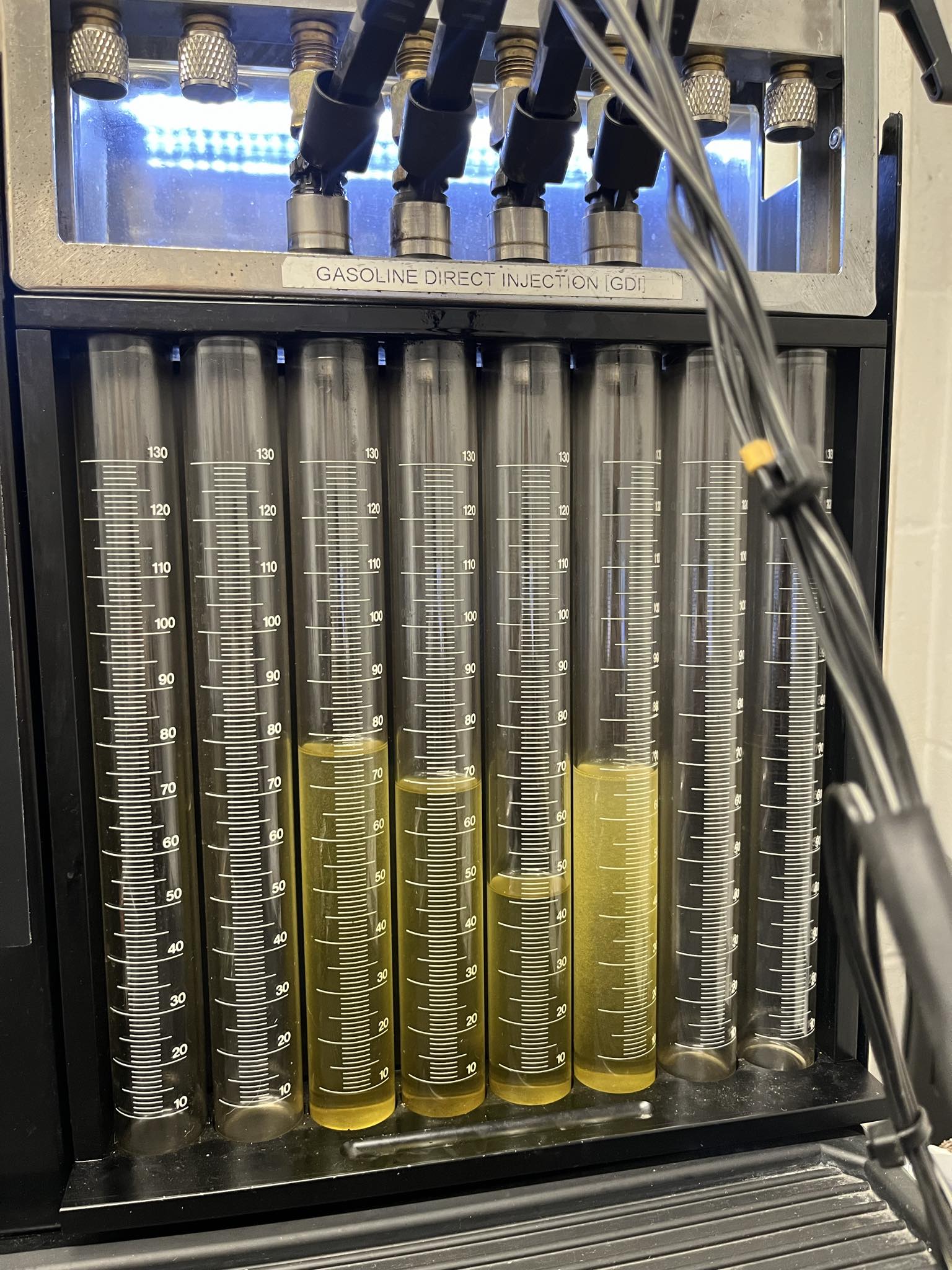
What makes these failures particularly challenging is that many workshops are not equipped to properly test piezo injectors. Basic test benches often cannot measure the speed, multiple injection events, or fine fuel metering that define piezo performance. As a result, injectors may be passed as functional when they are already operating outside acceptable limits.
With advanced testing machinery designed specifically for both piezo and solenoid injectors, it becomes possible to identify these subtle issues before they develop into major problems. Accurate testing allows for a clear understanding of injector condition, ensuring that performance is not just acceptable, but within precise specification.